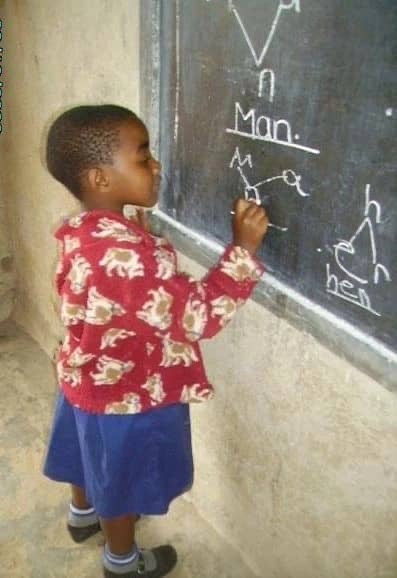

The School That Refused to Give Up
A story about two people, hundreds of children, and what becomes possible when education is treated not as charity, but as a pathway to human possibility.

There are some stories that begin with a business plan.
Others begin with a dream.
And then there are stories that begin with a problem so large that the only reasonable response is to start building something.
In the town of Sanga, in Uganda’s Kiruhura District, that is precisely what Nampwera Frank and his wife, Katabazi Esther, did.
In 2004, they founded what is now Bright Early Age Nursery and Primary School, a mixed day and boarding school established with a purpose that reaches considerably further than the conventional business of running a school.
They were responding to a reality that is painfully familiar across much of the developing world: children whose circumstances had placed them on the margins of opportunity.
Many were orphans. Others were living in vulnerable or profoundly difficult circumstances. The founders’ response was not simply to ask what could be done for these children, but what could be built with them so that they could eventually build lives of their own.
That distinction matters.
Because there is a profound difference between keeping a child alive and giving that child a future.
Bright Early was conceived around the latter.
Its stated mission is to work with individuals, families, communities and local government to address the fundamental needs of vulnerable children, helping them realise their potential, shape their futures and contribute to their communities. The organisation’s broader vision is a Ugandan society in which vulnerable children can enjoy their rights and reach their full potential.
Today, the school is supporting more than 274 children.
Two hundred and seventy-four individual lives.
Two hundred and seventy-four sets of parents, guardians, siblings, hopes, fears and ambitions.
Two hundred and seventy-four children who deserve something that sounds deceptively simple:
a fair chance.

But Good Intentions Need Buildings
This is where the story becomes more complicated — and, perhaps, more interesting.
It is easy to admire a school like Bright Early from a distance.
It is much harder to build one.
Children cannot learn in good intentions. Teachers cannot teach in good intentions. A school cannot expand on good intentions.
It needs classrooms.
It needs sanitation.
It needs accommodation.
It needs books and technology.
It needs trained teachers and administrators.
It needs a functioning kitchen. It needs infrastructure that allows children to live, learn and develop with dignity.
And it needs something that every serious organisation eventually requires:
capital.
Bright Early is therefore at an important juncture.
The challenge is no longer simply whether the vision is worthwhile.
The question is whether the infrastructure can catch up with the vision.
One immediate milestone is the construction of four new classrooms.
The project has been costed at 60,750,000 Ugandan shillings — approximately US$16,644 according to the school’s supplied project information.
What makes this particularly interesting to us at StoryBridge is the transparency of the proposition.
This is not an abstract request for “help”.
There is a defined project.
There is a defined cost.
And there are defined components.
The supplied budget, for example, identifies approximately US$1,117.80 for 120 bags of cement, US$2,387 for protective iron roofing sheets and US$1,288 for contractor labour.
That level of specificity matters.
Because serious philanthropy is not simply about generosity. It is about stewardship.
A donor wants to know where money is going.
A company wants to understand its social-impact footprint.
A foundation wants measurable outcomes.
An investor wants to understand the model, the people behind it, the risks, the opportunity and the potential for sustainable growth.
Bright Early’s story deserves to be examined through all of those lenses.


The Humanitarian Case
Let us begin with the most obvious — and perhaps the most important.
A child who receives an education acquires more than a collection of academic qualifications.
Education can alter the range of futures available to that child.
A classroom can therefore become something much larger than a room.
It can become a bridge.
A library can become a doorway.
A computer can become a connection to an economy that previously seemed impossibly distant.
A qualified teacher can become the adult who notices a child’s ability before the child has learned to recognise it themselves.
This is why the work at Bright Early matters.
The school’s founding rationale was explicitly connected to the needs of HIV/AIDS orphans and other vulnerable children whose circumstances had exceeded the interventions available to them.
Its support has included educational necessities ranging from uniforms, books, pens and pencils at primary level to boarding fees and scholastic materials for children progressing into secondary education.
There is something deeply moving about that.
But there is also something economically significant about it.
Because every child who is prevented from reaching his or her potential represents a loss that extends beyond one household.
Communities lose future teachers.
Future nurses.
Future entrepreneurs.
Future engineers.
Future writers.
Future farmers.
Future scientists.
Future leaders.
Human potential is an economic resource.
And education is one of the mechanisms through which societies convert that potential into capability.

The Investment Case
This is where the conversation needs to become more sophisticated.
Supporting Bright Early does not have to be framed exclusively as philanthropy.
For businesses, foundations and socially conscious investors, the school presents an opportunity to participate in a tangible social-impact project in which the relationship between expenditure and outcome can be made visible.
The school’s immediate infrastructure requirements include classrooms, learner accommodation, sanitation facilities, a proper kitchen and access to computers.
These are not decorative upgrades.
They are capacity-building assets.
Four additional classrooms can increase educational capacity.
Computers can introduce children to digital literacy and broaden access to information.
Improved accommodation can strengthen the viability of a boarding model.
Proper sanitation contributes directly to health, dignity and the learning environment.
A functional kitchen supports the basic infrastructure required to care for children who depend on the school.
The investment question therefore becomes more interesting than:
“How much money can we give?”
It becomes:
“What infrastructure investment will unlock the greatest increase in educational capacity and human opportunity?”
That is a question worthy of businesses.
It is worthy of foundations.
It is worthy of CSR departments.
And it is worthy of anyone interested in sustainable development rather than short-term charity.
The People Behind The School
Yet institutions are ultimately built by people.
And at the centre of this story are Nampwera Frank and Esther Katabazi.
They founded Bright Early in 2004 and have spent years developing an institution around their conviction that vulnerable children deserve protection, care, compassion and an opportunity to determine the direction of their own lives.
That kind of work is rarely glamorous.
There are no guarantees.
There are endless operational demands.
And every expansion creates another set of responsibilities.
What strikes me most about their story is that they have not merely identified a social problem.
They have taken responsibility for doing something about it.
That is a very different proposition.
It is also why the next chapter should not be written by Frank and Esther alone.


This is Where YOU Come In
Perhaps you are reading this as an individual.
Perhaps you are a teacher.
Perhaps you run a company.
Perhaps you are involved in corporate social responsibility.
Perhaps you represent a foundation.
Perhaps you are a philanthropist looking for a project where your contribution can be translated into something concrete.
Perhaps you are simply someone who believes that children should not have their futures determined by the circumstances into which they were born.
There are several ways to become part of this story.
You can provide financial support.
You can sponsor infrastructure.
You can connect Bright Early with a corporate CSR programme or philanthropic foundation.
You can provide educational resources.
You can contribute professional expertise.
You can volunteer.
The school’s supplied information identifies a need for teachers, head teachers, psychologists, accountants and administrators, while also welcoming donations of textbooks, school supplies and children’s clothing.
In other words, the invitation is not simply:
“Give us money.”
It is:
“Find the part of your capacity that can help us build this.”
That might be money.
It might be expertise.
It might be equipment.
It might be a professional connection.
It might be an introduction to someone who can open a door.
Sometimes philanthropy begins with a cheque.
Sometimes it begins with an email.
Sometimes it begins with one person saying to another:
“You need to meet these people.”

Why StoryBridge is Telling This Story
StoryBridge exists because we believe stories have a peculiar kind of power.
A spreadsheet can tell us that there are 274 children.
A budget can tell us that four classrooms will cost 60,750,000 Ugandan shillings.
A project proposal can tell us what needs to be built.
But a story allows us to understand why any of it matters.
That is why Bright Early feels like an appropriate story with which to begin this blog.
Because it sits at the intersection of everything we care about:
education, children, possibility, entrepreneurship, community and the power of people to build something meaningful from very little.
This is not a story about helplessness.
It is a story about agency.
Frank and Esther did not wait for a perfect set of circumstances before beginning.
They began.
They built.
They served.
They persisted.
And now they have reached the point where the next stage of that work requires a wider circle of people to participate.
That is not failure.
It is what growth looks like.


A Classroom is Never Just a Classroom
Imagine, for a moment, that one of those four proposed classrooms eventually contains thirty children.
Imagine those children sitting at desks.
Imagine the teacher entering for the first lesson.
Imagine one child who has always been told that university is for “other people”.
Imagine another who discovers a talent for mathematics.
Imagine another who becomes fascinated by computers.
Imagine another who eventually becomes a teacher herself.
We cannot know which child will become what.
That is precisely the point.
We should not have to know.
Children deserve the opportunity to surprise us.
A classroom is therefore not merely an expenditure.
It is an investment in possibilities whose returns cannot always be calculated in advance.
And perhaps that is the most compelling argument of all.
Help Build The Next Chapter
Bright Early Age Nursery and Primary School is located in Sanga Town Council in Uganda’s Kiruhura District. The school’s supplied information lists its website as brightearlyageschool.org and provides contact details for those wishing to connect with the school directly.
The immediate four-classroom project represents a clearly defined opportunity for support, while the broader needs include accommodation, sanitation, kitchen infrastructure and computers.
If you are an individual donor, a company, a foundation, an educator, an investor, a development organisation or simply someone who believes that where a child begins should not determine where that child ends, perhaps this is a story worth becoming part of.
Not every contribution needs to be enormous.
Not every contribution needs to be financial.
But collectively, contributions become infrastructure.
Infrastructure becomes capacity.
Capacity becomes education.
Education creates possibility.
And possibility changes lives.
The bridge begins with a single step.
This is ours.
Perhaps the next step can be yours.


If you would like to support this project in any way possible, do consider contacting Nampwera Frank and the BEANS Team via
email: nampwerafrank12@gmail.com
Website: brightearlyageschool.org
StoryBridge
Connecting stories, people and possibilities.